

By Anchor Dental Implant Center | July 6, 2026
Wondering what to expect during dental implant recovery week by week in Austin? You are not alone. Most patients feel nervous about the healing process before they even sit in the chair. The good news is that recovery is very manageable when you know what is coming. Dr. Hooman Samani and the team at Anchor Dental Implant Center want you to feel confident every step of the way.
Dental implants are one of the most reliable tooth replacement options available today. The placement procedure is only part of the journey. Understanding the recovery timeline helps you plan ahead and heal faster. This guide walks you through each phase so nothing catches you off guard.
Your First Week After Dental Implant Placement in Austin
The first 48 to 72 hours are the most intense part of recovery. Swelling, mild bleeding, and soreness are completely normal during this window. Your body is responding to the procedure and beginning the healing process. Most patients manage discomfort well with over-the-counter pain relievers as directed by Dr. Samani.
You should rest as much as possible during the first two days. Avoid strenuous activity, bending over, or anything that raises your blood pressure. These actions can increase swelling and slow healing. Keep your head elevated even while sleeping to reduce puffiness.
Here is what to expect in the first seven days:
- Some bleeding or pinkish saliva for the first 24 hours
- Swelling that peaks around day two or three
- Mild to moderate soreness around the implant site
- Possible bruising on the cheek or jaw
- Sensitivity to temperature near the surgical area
Cold compresses applied to the outside of your cheek help reduce swelling. Use them in 20-minute intervals during the first day. Follow any specific instructions your care team provides after surgery. Every patient heals at a slightly different pace.
What to Eat and Drink During Implant Recovery
Your diet plays a huge role in how quickly you heal. Soft foods protect the implant site and prevent irritation. Hard, crunchy, or chewy foods can disturb the area before it fully closes. Stick to a soft-food diet for at least the first two weeks.
Good food choices in the early recovery phase include:
- Mashed potatoes and soft cooked vegetables
- Yogurt, smoothies, and protein shakes
- Scrambled eggs and oatmeal
- Soup broth and soft fish
- Applesauce and ripe bananas
Avoid using a straw for at least a week after surgery. The suction motion can disrupt the surgical site. Also avoid alcohol and smoking, as both significantly delay healing. Staying well-hydrated with water supports tissue recovery at the cellular level.
As healing progresses into weeks two and three, you can slowly reintroduce softer solid foods. Always chew on the opposite side of the implant. Ask Dr. Samani before reintroducing anything that feels risky. Your comfort is always the best guide during this phase.
Weeks Two Through Eight: Osseointegration Begins
After the first week, most of the visible symptoms start to fade. Swelling and soreness decrease significantly by day ten in most cases. You may still feel occasional tenderness, but it should be mild. This phase marks the beginning of osseointegration.
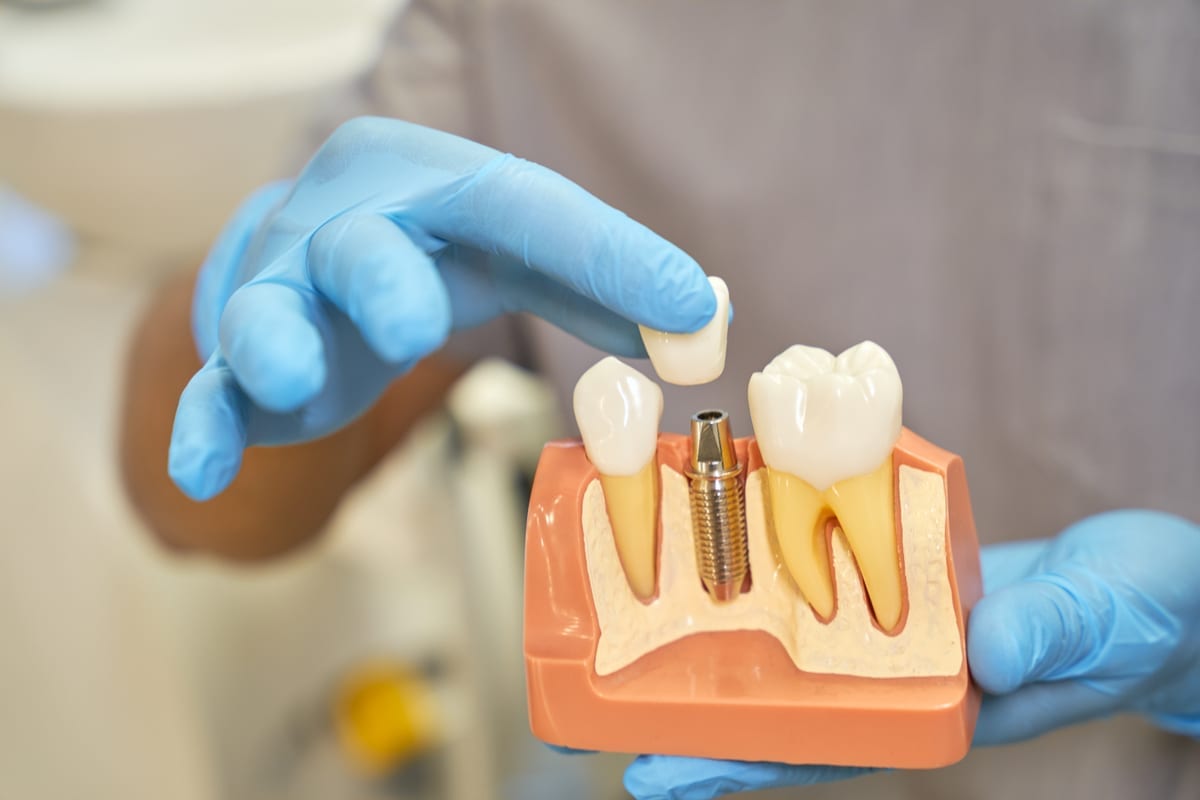
Osseointegration is the process where the titanium implant post fuses with your jawbone. This is what gives dental implants their legendary stability. The process takes anywhere from eight to twelve weeks for most patients. In some cases, it can take up to six months depending on bone density.
During this period, it is critical to keep the area clean. Brush gently around the implant with a soft-bristled toothbrush. Use any rinse or antimicrobial solution your care team recommends. Skipping oral hygiene during healing can lead to complications like peri-implantitis.
You will likely have a follow-up appointment around the two-week mark. Dr. Samani will check the healing site and remove any sutures if needed. Regular check-ins keep recovery on track. Do not skip these appointments even if you feel completely fine.
Pain Management and When to Call Your Dentist
Pain levels vary from patient to patient after implant surgery. Some people feel only minor discomfort that resolves within a few days. Others experience more significant soreness that lasts into week two. Both experiences fall within the normal range for most healthy adults.
Over-the-counter anti-inflammatories like ibuprofen are often enough for pain relief. Dr. Samani may also prescribe a short course of antibiotics to prevent infection. Take all medications exactly as directed. Never double-dose or skip doses of antibiotics partway through the course.
If managing discomfort during the procedure itself was a concern before treatment, you may have explored Sedation Options to stay relaxed throughout the process. Many Austin patients find that sedation makes the entire experience far less stressful.
Contact Anchor Dental Implant Center right away if you notice any of the following:
- Severe pain that worsens after day three instead of improving
- Fever above 101 degrees Fahrenheit
- Excessive bleeding that does not stop with gentle pressure
- Visible pus or a foul taste near the implant site
- A loose or shifting implant post
These signs are rare but require prompt attention. Catching a problem early dramatically improves outcomes. Trust your instincts — if something feels wrong, call the office. The team is always available to answer your questions and guide you through recovery.
Long-Term Care for a Successful Implant
Once osseointegration is complete, your implant functions just like a natural tooth. You can eat, speak, and smile with full confidence. However, long-term success depends on consistent oral hygiene habits. Implants cannot decay, but the surrounding gum tissue still needs care.
Brush twice daily and floss around the implant every day. Use an interdental brush or water flosser to clean below the gumline. Schedule regular cleanings with your dental hygienist every six months. Professional cleanings remove buildup that regular brushing cannot reach.
Curious about how other Austin patients have experienced the implant journey? Reading our Reviews can give you real-world insight from people who have been exactly where you are now.
Avoid habits that put stress on your implant over time. Do not chew ice, hard candy, or use your teeth as tools. If you grind your teeth at night, ask Dr. Samani about a custom night guard. Protecting your investment ensures your implant lasts for decades.
Ready to Start Your Implant Journey in Austin?
Dental implant recovery is very predictable when you follow professional guidance. Week by week, your body heals and the implant integrates naturally. Most patients in Austin report that the process was far easier than they anticipated. With the right preparation and support, you can feel confident from day one through final restoration.
Dr. Hooman Samani and the Anchor Dental Implant Center team are here to guide you every step of the way. We take pride in educating our patients so they feel empowered, not anxious. Your recovery is our priority, and we are with you throughout the entire process. Book Now to schedule your appointment with our team.
Frequently Asked Questions
How long does dental implant recovery take in Austin?
Most patients experience the most significant discomfort in the first week. Full osseointegration — where the implant fuses with the jawbone — takes eight to twelve weeks on average. Some patients with lower bone density may need up to six months. Your specific timeline depends on your overall health and how well you follow post-operative care instructions.
What foods should I avoid after getting a dental implant?
Avoid hard, crunchy, or chewy foods for at least two weeks after surgery. Also avoid using straws, consuming alcohol, and smoking during the healing period. These habits can irritate the surgical site or slow tissue healing. Stick to soft, nutrient-rich foods to support a smooth recovery.
Is dental implant surgery painful?
The procedure itself is performed under local anesthesia, so most patients feel little to no pain during surgery. Post-operative soreness is normal and typically peaks within the first 48 to 72 hours. Over-the-counter pain relievers manage discomfort well for most patients. Dr. Samani will provide personalized recommendations to keep you comfortable throughout your recovery.
When can I return to normal activities after a dental implant?
Light activities like desk work can usually resume the next day after surgery. Avoid strenuous physical activity, heavy lifting, or intense exercise for at least three to five days. Listen to your body and ease back into your routine gradually. Always follow any specific restrictions Dr. Samani recommends based on your individual case.
How do I keep my dental implant clean during recovery?
Gentle brushing with a soft-bristled toothbrush is safe starting the day after surgery. Avoid direct pressure on the implant site until the area has had time to close. Use any prescribed rinse or antimicrobial solution as directed. Once fully healed, treat your implant like a natural tooth with daily brushing and flossing.