


By Anchor Dental Implant Center | March 13, 2026
Full-mouth restoration can transform the way you eat, speak, and smile. But for many people, the thought of spending long hours in the dental chair can feel overwhelming. Whether it’s anxiety, a sensitive gag reflex, or simply the time required for complex procedures, comfort becomes a major concern.
That’s where modern sedation dentistry can make a real difference.
Many Austin patients who need multiple treatments—such as dental implants, crowns, or bone grafting—choose sedation options that allow them to stay relaxed while their dentist completes several procedures in one visit.
After the initial consultation and treatment planning, some clinics recommend IV Sedation Dentistry Austin patients trust when extensive restorative work is required. This method allows your dental team to provide efficient treatment while you remain calm and comfortable throughout the appointment.
If you’ve been delaying treatment because of nerves or time constraints, understanding how IV sedation works can help you feel more confident about taking the next step.
What Is IV Sedation in Dentistry?
IV sedation is a technique where medication is delivered through a vein to help patients enter a deeply relaxed state during dental treatment.
You remain conscious and able to respond to instructions, but you feel calm, sleepy, and largely unaware of the procedure taking place.
Dentists often recommend IV sedation for longer or more complex treatments, especially full-mouth restorations that may involve multiple procedures in one session.
Key characteristics include:
- Fast-acting relaxation
- Adjustable sedation level during treatment
- Little memory of the procedure afterward
- Continuous monitoring for safety
For patients who feel nervous about dental work, it can completely change the experience.
Why Full-Mouth Restorations Can Take Time
Full-mouth restoration isn’t a single treatment. It usually combines several procedures to rebuild damaged or missing teeth.
Depending on your situation, a treatment plan may include:
- Dental implants
- Implant-supported bridges
- Crowns and veneers
- Bone grafting
- Gum treatments
- Bite adjustments
Completing several of these procedures during one appointment saves time and reduces the number of visits needed. However, longer appointments can feel intimidating without sedation support.
IV sedation allows dentists to work efficiently while you remain relaxed.
Why Many Austin Patients Choose IV Sedation
Austin is known for its busy lifestyle. Between commuting on I-35, working downtown, and enjoying weekends around Lady Bird Lake or South Congress, finding time for multiple dental appointments can be difficult.
Sedation dentistry helps solve that challenge.
Many patients prefer completing major restorative work in fewer visits rather than spreading it out over months.
Benefits include:
- Reduced anxiety – Ideal for patients with dental fear
- Greater comfort – Helps minimize stress during longer procedures
- Fewer appointments – Multiple treatments can be done in one visit
- Less awareness of time – Procedures feel shorter
- Improved efficiency – Dentists can work continuously without interruption
For busy professionals, parents, and retirees in Austin, this approach makes restorative treatment far more manageable.
Who Is a Good Candidate for IV Sedation?
Not every patient requires sedation, but it can be especially helpful for certain situations.
You may benefit from sedation if you:
- Feel nervous or anxious about dental procedures
- Need multiple restorative treatments
- Have difficulty sitting for long periods
- Have a strong gag reflex
- Experienced negative dental visits in the past
- Want to complete treatment in fewer appointments
A consultation with your dentist will determine whether sedation is safe and appropriate for your health history.
Source: Perfect White Smile
What to Expect During Your Appointment
Understanding the process can help reduce uncertainty before treatment.
1. Consultation and Planning
Your dentist evaluates your oral health, discusses goals, and creates a personalized treatment plan. This is also when sedation options are reviewed.
2. Preparing for the Procedure
Patients are usually asked to:
- Avoid eating for several hours before treatment
- Arrange transportation home
- Share medical history and medications
3. During the Treatment
Once the IV medication is administered, you’ll quickly begin to feel relaxed.
Throughout the procedure:
- Your vital signs are monitored
- The sedation level can be adjusted
- You remain comfortable while treatment progresses
Many patients feel like the appointment passed quickly.
4. After the Appointment
You’ll rest briefly before heading home with your companion.
Common recovery experiences include:
- Mild drowsiness
- Limited memory of the procedure
- Ability to return to normal routines the next day
Your dentist will provide detailed aftercare instructions for healing and oral hygiene.
Local Lifestyle Factors That Make Sedation Helpful
Austin’s lifestyle often influences how people approach healthcare.
Here are a few reasons sedation dentistry fits well with the local community:
Busy Work Schedules
From tech professionals in the Domain to entrepreneurs in East Austin, many residents prefer treatments that minimize repeat visits.
Active Social Life
With live music, festivals like SXSW, and countless outdoor activities, people want dental solutions that restore confidence quickly.
Family Commitments
Parents juggling school schedules, work, and sports practices appreciate treatment plans that require fewer appointments.
Sedation allows dentists to complete major restorative work efficiently while keeping patients comfortable.
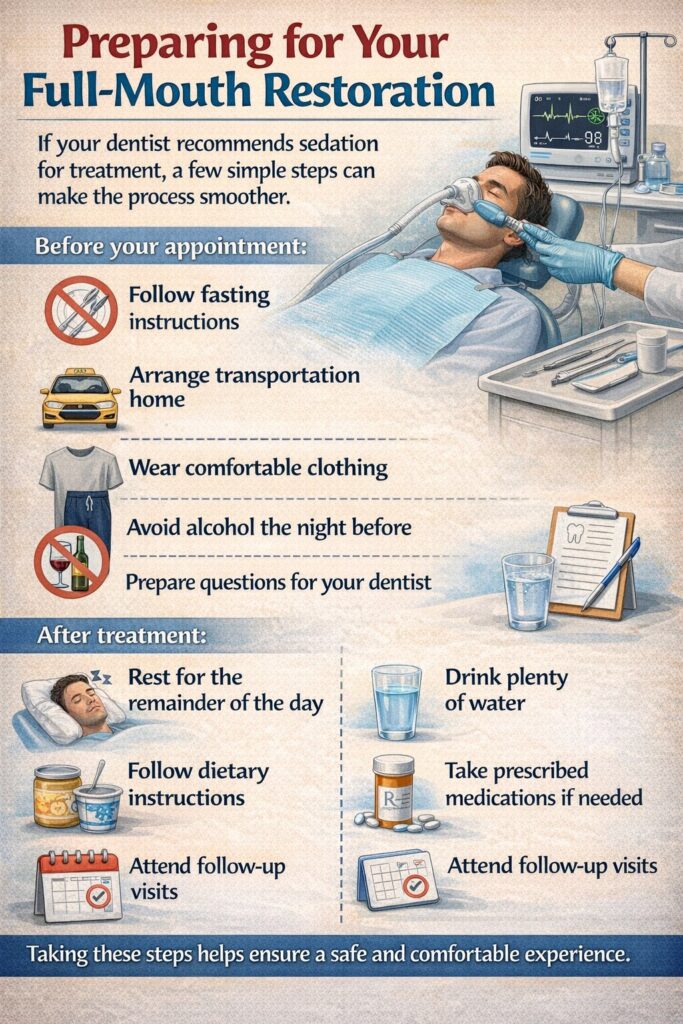
Preparing for Your Full-Mouth Restoration
If your dentist recommends sedation for treatment, a few simple steps can make the process smoother.
Before your appointment:
- Follow fasting instructions
- Arrange transportation home
- Wear comfortable clothing
- Avoid alcohol the night before
- Prepare questions for your dentist
After treatment:
- Rest for the remainder of the day
- Drink plenty of water
- Follow dietary instructions
- Take prescribed medications if needed
- Attend follow-up visits
Taking these steps helps ensure a safe and comfortable experience.
Common Questions Patients Ask
Is IV sedation safe?
Yes. Dentists trained in sedation techniques carefully monitor vital signs throughout the procedure. Medical history is reviewed beforehand to ensure it is appropriate for the patient.
Will I be completely asleep?
Not exactly. Most patients remain conscious but deeply relaxed. You can still respond to instructions from the dental team.
How long does recovery take?
Most people feel normal by the following day. However, you should avoid driving or major activities on the same day of the procedure.
Will I remember the procedure?
Many patients remember very little. The medication often creates a light amnesia effect, which helps reduce anxiety about treatment.
Can multiple procedures be done at once?
Yes. That’s one of the main advantages. Dentists often combine treatments such as implants, crowns, or extractions into a single appointment.
Moving Toward a Healthier Smile
Full-mouth restoration can feel like a big step, but modern sedation techniques make the process far more comfortable than many people expect.
If you’ve been postponing treatment because of dental anxiety or concerns about the time involved, sedation dentistry can help you move forward with greater confidence. Many patients exploring IV sedation dentistry in Austin discover that comprehensive dental care can be both efficient and surprisingly stress-free.
A healthier smile does more than improve oral function—it restores confidence in everyday moments. Whether you’re enjoying tacos on South Congress, meeting clients downtown, or spending time with family at Zilker Park, feeling comfortable with your smile makes a difference.
At Anchor Dental Implant Center, the focus is on creating a calm, supportive treatment experience while helping patients rebuild strong, natural-looking smiles. If you’re considering full-mouth restoration, schedule a consultation to explore your options and find out whether sedation dentistry is right for you.
Book your appointment today and take the first step toward a healthier, more confident smile.