



By Anchor Dental Implant Center | February 17, 2026
Wisdom teeth, or the third molars, are a group of teeth situated at the back of the mouth. Most of the time, these teeth begin to grow in one’s late teens or early twenties. However, not everyone has problems with these teeth; some feel pain, while others have concerns and wonder whether the teeth should be extracted.
This guide will discuss the signs to watch for that indicate whether it is time to consider having your wisdom teeth extracted, and the steps you need to take to properly care for your teeth. Whether you’re still feeling discomfort or have dental problems, this guide will help you think through your options.
Signs That Wisdom Teeth Need to be Extracted
Your wisdom teeth can cause a range of problems if they do not grow properly, and can often cause issues for your health and well-being. However, some of the common signs of whether or not your third molar needs to be removed include:
1. Pain in the Back of the Mouth
If you are feeling pain or soreness in the back of your mouth, especially where your wisdom teeth are coming in, it may indicate that they are impacted. Impacted third molars are those that do not have enough room to come in properly, meaning that they cause you pain along with other symptoms, such as swelling.
2. Swollen or Bleeding Gums
Inflammation or bleeding of the gums, especially around the third molar, may be a sign of an infection or gum disease. It happens when there is insufficient space for these teeth, making it difficult for these teeth to fully emerge. Bacteria may then accumulate around the gums, thereby inflaming and causing them to bleed, requiring immediate wisdom teeth extraction in Austin, TX.
3. Jaw Stiffness or Swelling
Another sign that your third molars are likely to be removed is jaw stiffness or swelling in your mouth area, particularly at the back of your mouth. This may be due to impacted teeth or an infection, which can make it difficult to open and close your mouth.
4. Cavities or Tooth Decay
If they are only partially erupted, they can be difficult to maintain for oral hygiene, increasing the risk of tooth decay. Factors that may confront you as you carefully consider an extraction procedure include, among others, concerns that if you have a partially erupted third molar, it may be prone to tooth decay.
5. Bad Breath or a Bad Taste in Your Mouth
Bad odor or bad taste in the mouth may be an indication of an infection in the region around your third molars. This infection may be caused by the buildup of bacteria around the partially erupted third molar.
6. Crowded Teeth or Misalignment
If they do not emerge upright, third molars can sometimes push against other teeth, causing them to move out of place. This can even lead to teeth overcrowding, undoing previous orthodontic corrections. You may be feeling tooth movement, which may indicate that you should consider extraction.
Source: Medical Centric Podcast
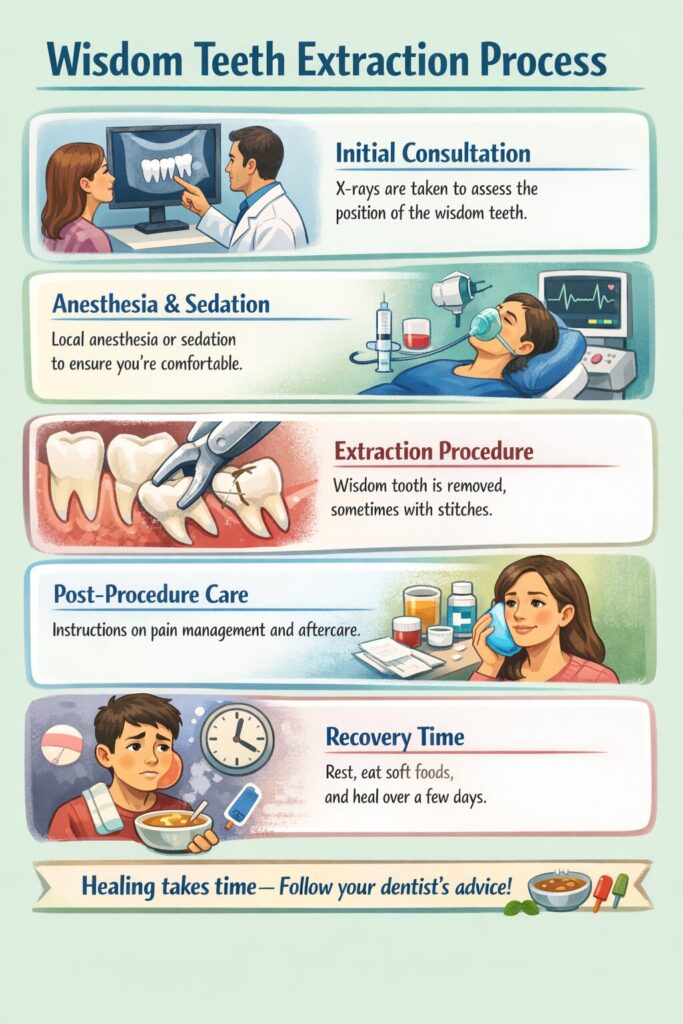
Wisdom Teeth Extraction Process
Removing third molars is a simple procedure that helps prevent future dental health issues. Whether the pain is caused by your third molars or is a potential future problem, knowing the step-by-step process for tooth removal can help you feel confident and prepared. The process of tooth removal is:
- Initial Consultation: Before the procedure begins, your dentist or oral surgeon will examine your third molar and determine their exact position using X-rays. This will help them know the best way to remove them.
- Anesthesia and Sedation: To ensure your comfort, your area will be numbed with a local anaesthetic before your third molar is extracted. In case you are feeling apprehensive, you may prefer to sleep through it, and that’s quite okay, too.
- Extraction Procedure: The dentist or oral surgeon will then remove the third molar. In some cases, the affected teeth must be broken down to facilitate removal. The gums may be closed with stitches.
- Post-Procedure Care: Once you’ve completed the procedure, you will be given instructions on how to take care of yourself afterward. These instructions may contain advice on pain, swelling, and healing.
- Recovery Time: The recovery process will take a few days to up to a week. You will feel mild pain and see some swelling and bruising, which are normal side effects of the surgery. Eat soft foods and avoid activities during the recovery period.
By understanding the third molar extraction process, you can approach the procedure with confidence and be ready for a smooth recovery. If you think you might need extraction, schedule an appointment to discuss your options.
Taking Action for Your Oral Health
Whether you have any of these symptoms, getting your third molar extracted in Austin, TX, might be the best option for you. Depending on your situation, removing your impacted, problematic, or unerupted teeth may be essential to prevent canine dental problems. If you are feeling uncomfortable or think your wisdom tooth may need extraction, it is vital to see a professional as soon as possible.
Are you concerned about your wisdom teeth? At Anchor Dental Implant Center, we recognize that your comfort and care are of utmost importance. If you suspect your wisdom teeth require extraction, we are here to offer a detailed assessment and walk you through the process. Schedule an appointment with us and let us guide you through the process as smoothly as possible. Contact us today and take the first step to a healthy smile!
Questions People Ask About Wisdom Teeth Extraction
What are the signs that my wisdom teeth need to be removed?
Common signs include pain or swelling in the back of the mouth, gum bleeding, jaw stiffness, and misalignment of your teeth. If you feel any of these symptoms, it’s important to consult a dentist for a thorough evaluation.
How long does it take to recover after wisdom teeth extraction?
Recovery time can vary, but most patients feel better within a few days to a week. Full recovery might take a few weeks, depending on the complexity of the ex
Will I need general anesthesia for wisdom teeth removal?
Wisdom teeth extractions are usually done with local anesthesia to numb the area. However, sedation options are available for those who feel anxious or prefer to be sedated during the procedure.
Can I keep my wisdom teeth if they aren’t causing pain?
Not all wisdom teeth need to be removed. If they’re healthy, properly aligned, and cause no issues, your dentist may recommend monitoring them rather than extracting them. Regular check-ups will help monitor any changes.
What happens if I don’t remove my wisdom teeth?
Leaving impacted or problematic wisdom teeth untreated can lead to complications, including infections, tooth decay, or misalignment of your other teeth. It’s important to consult your dentist to assess the best course of action.
Is wisdom tooth extraction a painful procedure?
While some discomfort may be felt during and after the extraction, the procedure is typically performed under local anesthesia, and pain can be managed with prescribed medications. Most patients find the recovery manageable with proper care.